
Changing landscapes
Seeing with fresh eyes

Hello, I’m Gill and I write a photography blog inspired by the landscapes of Suffolk and beyond. Please subscribe to read more of my writing and visit my website to view my images.
‘Photography cannot change the world, but it can show the world, especially when it changes.’
Marc Riboud
The view from the top of the cliffs eastwards is beautiful. The North Sea, usually a churning mass of grey and brown, today reflected the pale blue sky while its surface danced with lazy waves and shimmering light.
It is a tranquil scene that lifts the spirits and fills me with joy. But this shore, with its sandy cliffs and sea worn coastline has another story to tell, one that isn’t so heartening.
The beach, at the foot of the cliffs about 15 meters below me, resembles a war zone. Everywhere I look fallen trees litter the tide line, accompanied by mounds of sand and soil where the soft cliffs have crumbled. The wood I am standing in is eroding away. Change is everywhere on this stretch of the Suffolk Coast, and while it is interesting photographically it is frightening to see the extent and speed at which the land is retreating inwards.
The last time I visited this beach was at the end of the summer in 2024 and I wrote about my trip in this blog post. Back then the beach was tidy, with only a few fallen trees on the tide line and some good compositions for minimalist seascapes. One of my favourite images came from that outing.
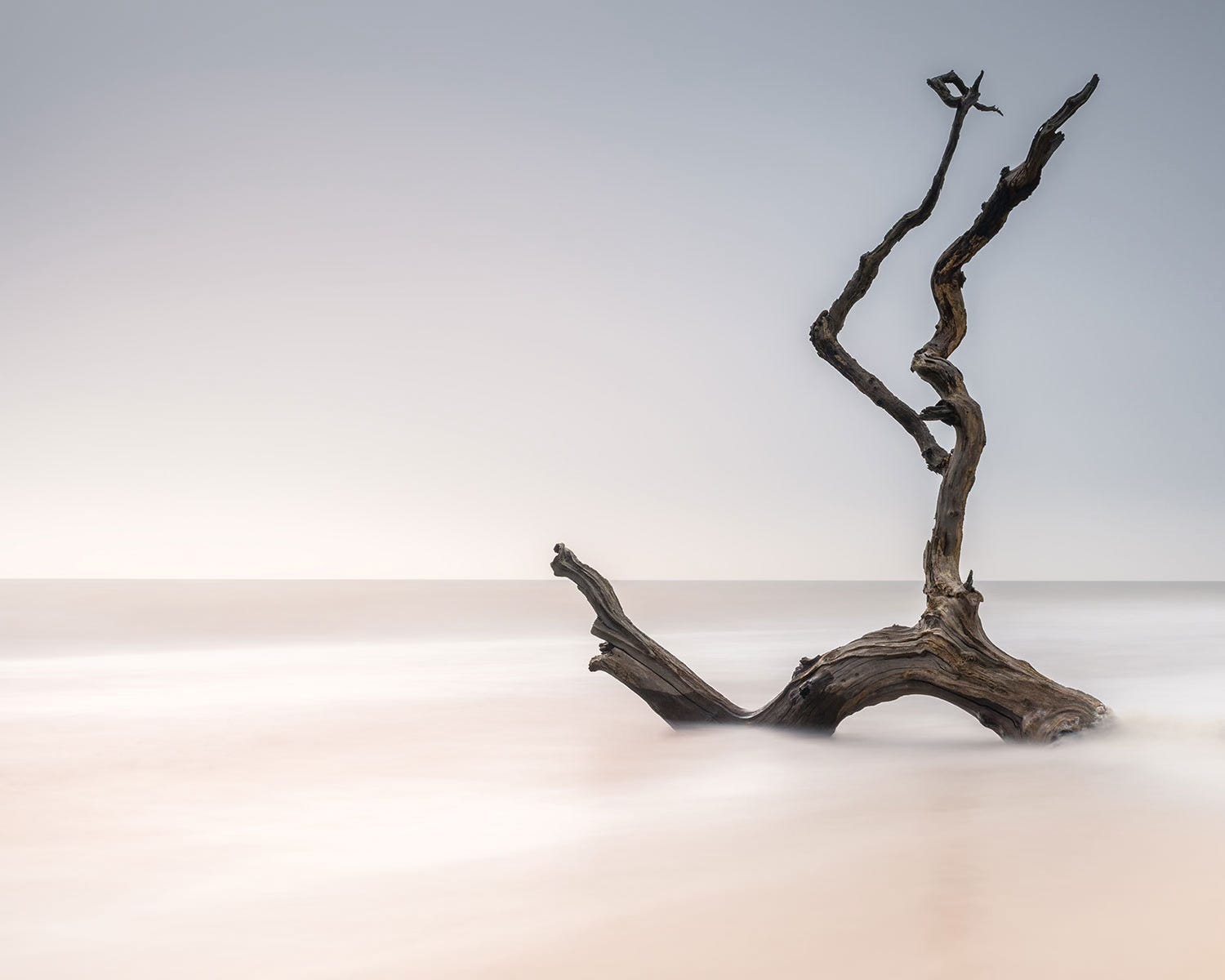
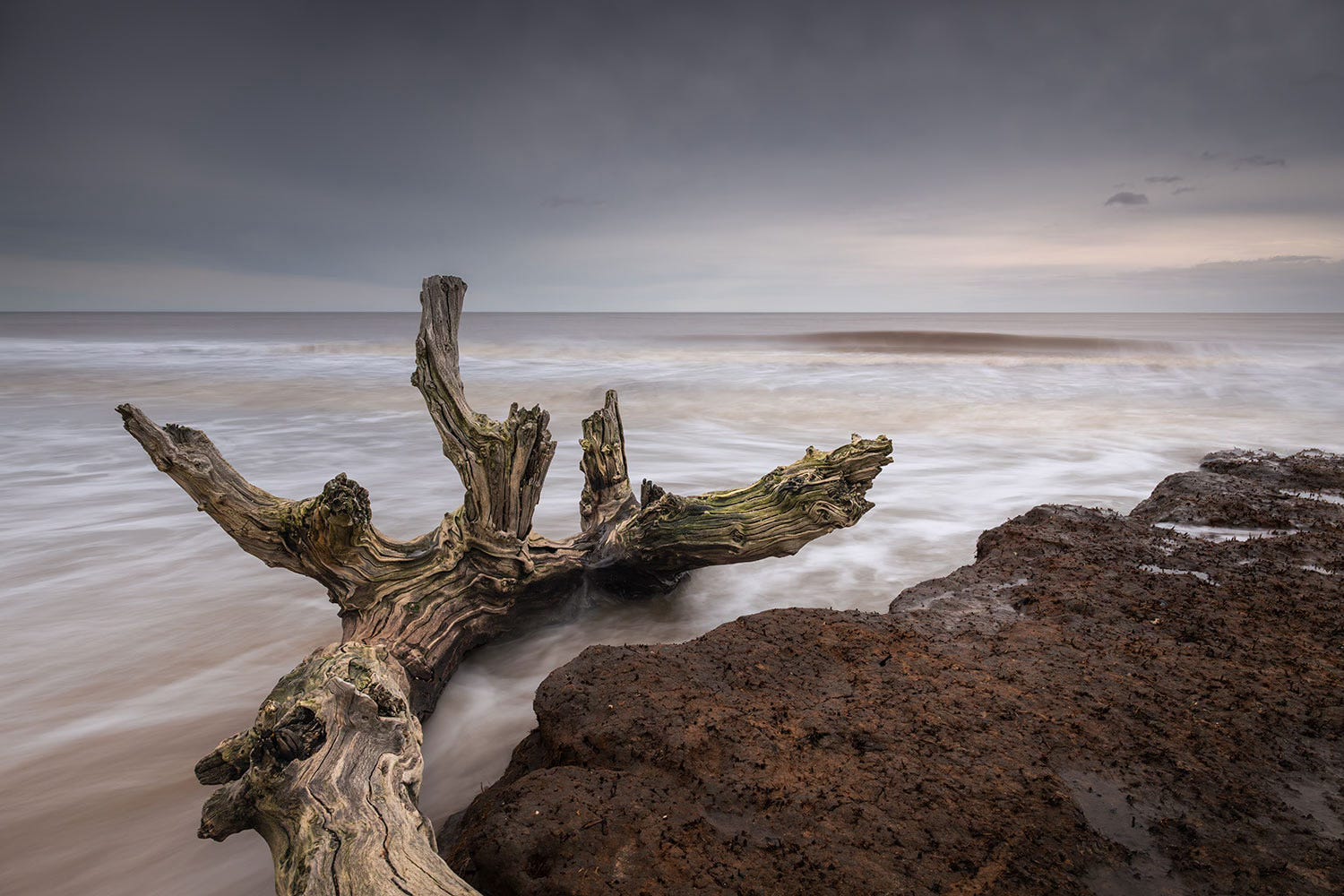
Today, this shot is no longer possible. The tree is still in the same place on the beach, partially buried in the sand, but it is surrounded by the debris of a fallen forest. Tangled limbs, interlocking branches and marine debris have transformed the once calm scene into a chaotic jumble, the aftermath of violent change.
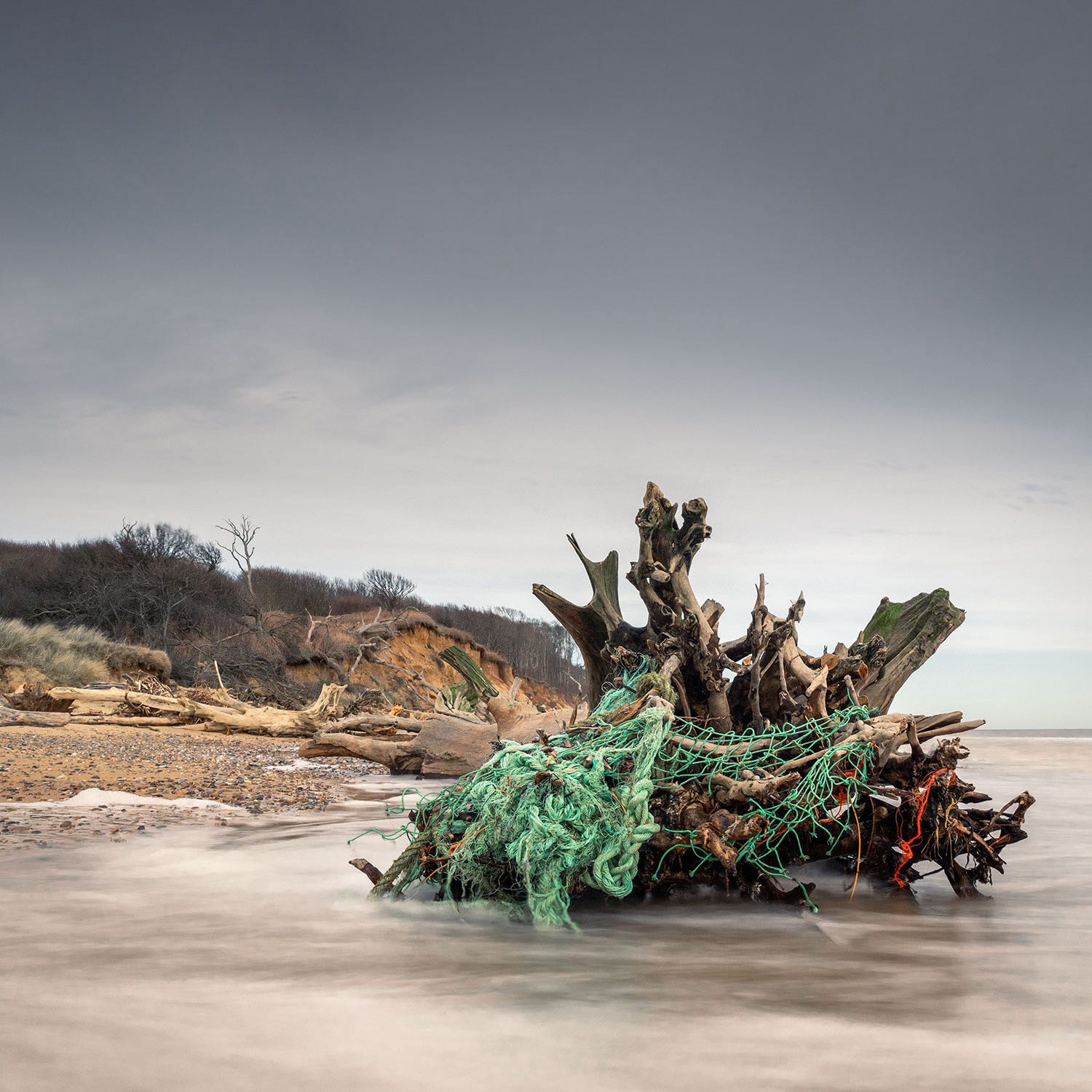
At first I feel sad that I can’t reimagine one of my favourite images, but then I ask myself why I would want to do that? Why repeat something I have done before? Surely it is better to look with fresh eyes and see what presents itself.
So that is what I do, I walk, I observe and eventually I feel a compulsion to create a series of images to tell a story - a triptych of change. I want to depict the passing of time (a theme we are exploring in my winter project cohort at the moment) and this is what I came up with.
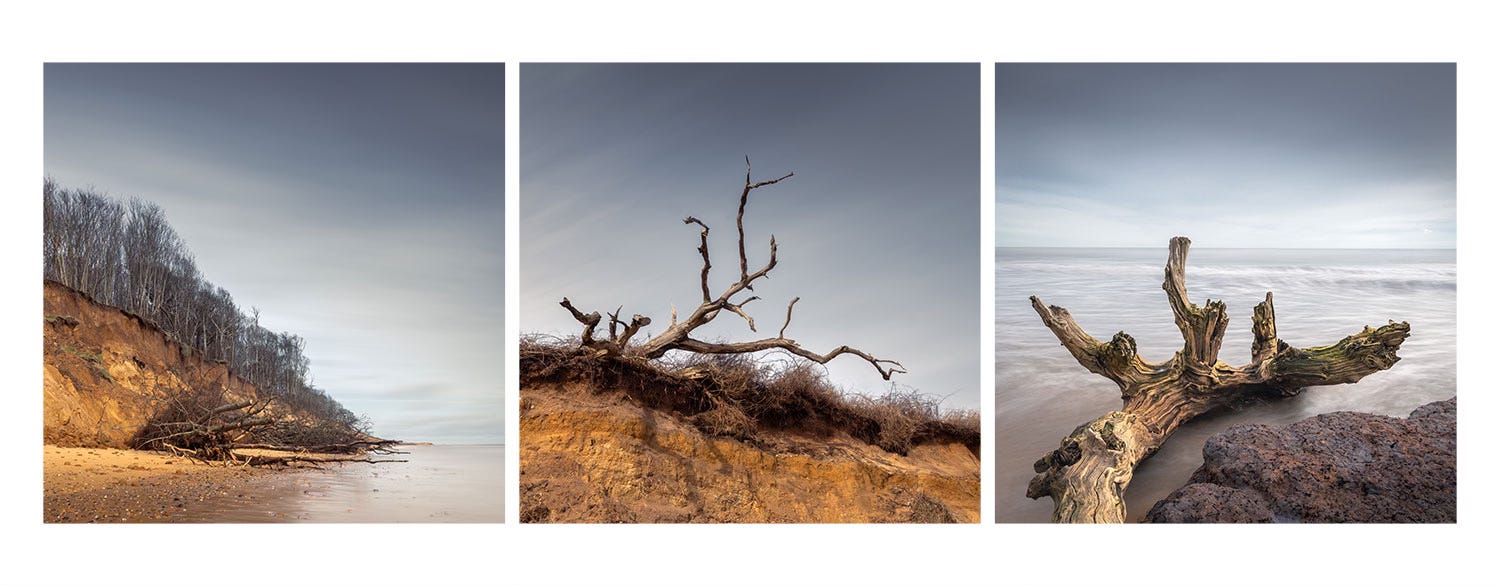
I spend a lot of time working with the tree in the final image in this triptych as I loved the textures and patterns in the wood. I photographed this tree on my last visit, but the beach was higher then and most of the trunk was buried under the sand.
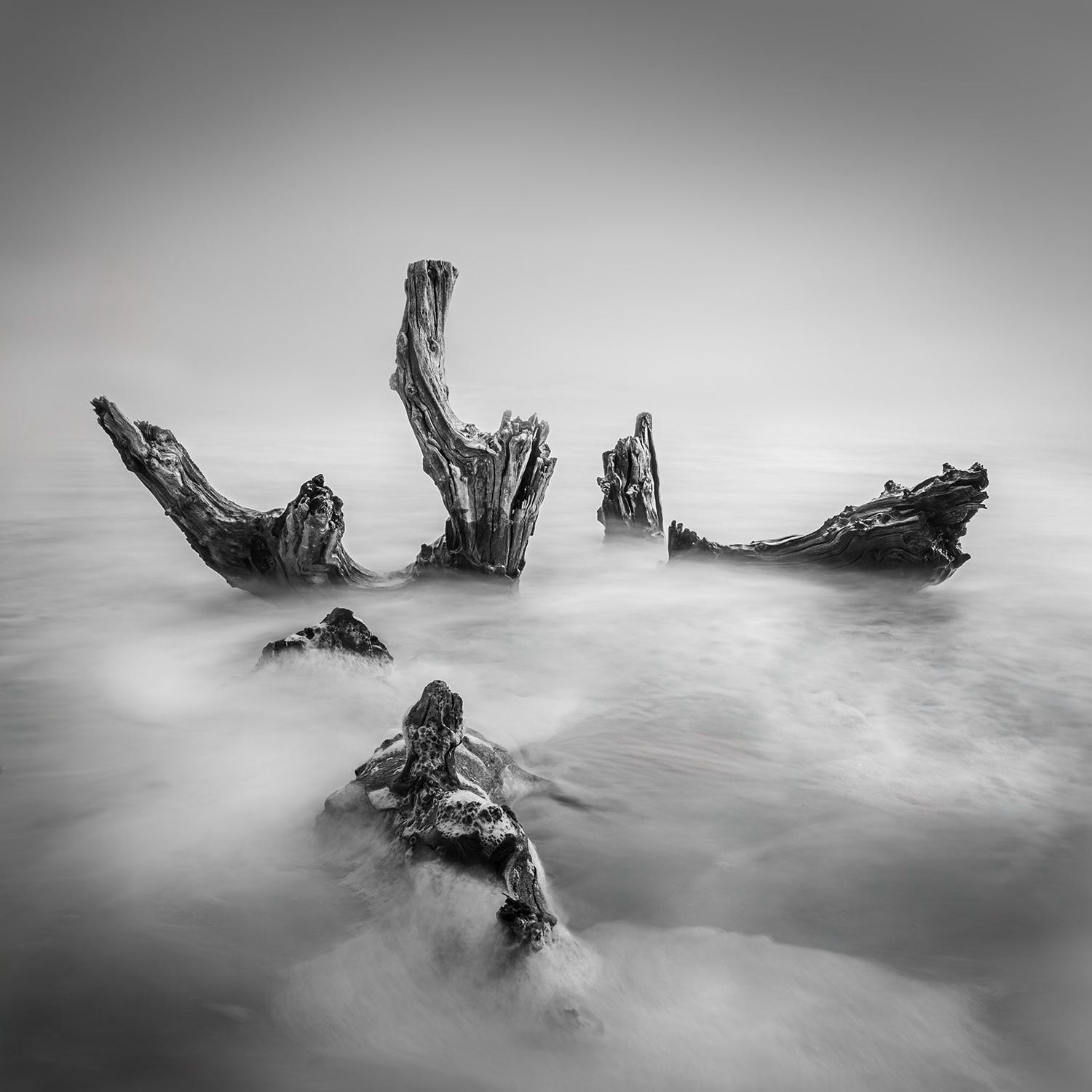
Now it is revealed in all its glory and I enjoy the challenge of creating an alternative composition, which I feel tells a better story.
Change is inevitable, it is part of life and I don’t think we should be sad when a favourite composition disappears. The evolution of the landscape opens up opportunities for us to see with fresh eyes and exert our creativity. It is too easy to fall into the trap of revisiting locations and repeating what has been done before. Change keeps things fresh, it provides challenges and it helps our photography evolve.
The real voyage of discovery consists not in seeking new landscapes, but in having new eyes.
Marcel Proust.
Are you good at embracing change? Do you enjoy re imagining familiar landscapes? Please leave a comment and join the conversation.
In this post I mentioned my winter project cohort which I have been running throughout February. This is an online workshop which brings together 10 people interested in pursuing a mini project. This session is fully booked but if you would like to join me in future sessions I have the following available:
Summer Project Cohort - 6 week project based workshop over zoom exploring ‘Summer in layers’.
Winter Project Cohort - 7 week project based workshop over zoom exploring the theme of Thresholds.
Thank you very much for reading and until next time enjoy your photography.
Gill
Beautiful images! Incredible actually.
Beautiful images Gill, I especially love the triptych. Landscape photographers pay attention to the landscape, and the evidence is clear, at least to those who pay attention, that the world is rapidly changing as a result of man made climate change. This is the most important story we can tell.